Monday, December 5, 2011

Tuesday December 6 Housing and Economic stories

KeNosHousingPortal.blogspot.com

TOP STORIES:

Scare tactics in Greece - (www.nytimes.com) AS the debt mess in Europe deepens, bankers are pressing Greece’s bond holders to swallow big losses. Leading the charge is BNP Paribas, the big French bank, which has been hired by the Greek government to help persuade investors to accept a deal that would cut the value of their investments in half. On paper, this restructuring would be voluntary. Bond holders would exchange their old Greek bonds, at a 50 percent loss, for new ones that would mature in 30 years. Painful, yes. But in theory, such a move would help Greece get a handle on its debt, and that would be good for everyone. Behind the scenes, however, BNP officials seem to be twisting some arms. A big point of contention is — surprise! — derivatives. Investors who own Greek debt and have bought insurance on it, in the form of credit default swaps, wonder why they should accept the offer that’s on the table. If Greece stops paying after the restructuring, those swaps are supposed to cover their losses, much the way homeowners’ insurance would cover a fire.

Europe Fears a Credit Squeeze as Investors Sell Bond Holdings- (www.nytimes.com) Nervous investors around the globe are accelerating their exit from the debt of European governments and banks, increasing the risk of a credit squeeze that could set off a downward spiral. Financial institutions are dumping their vast holdings of European government debt and spurning new bond issues by countries like Spain and Italy. And many have decided not to renew short-term loans to European banks, which are needed to finance day-to-day operations. If this trend continues, it risks creating a vicious cycle of rising borrowing costs, deeper spending cuts and slowing growth, which is hard to get out of, especially as some European banks are having trouble meeting their financing needs. “It’s a pretty terrible spiral,” said Peter R. Fisher, head of fixed income at the asset manager BlackRock and a former senior Treasury official in the George W. Bush administration.

Spain: The fifth victim to fall in Europe's arc of depression - (www.telegraph.co.uk) Let us all extend our sympathies to the Spanish people. They face the greatest national emergency since the Civil War yet their vote for drastic change is palpably useless, even if democracy has in this case at least been respected. As union leader Javier Dos put it, the EU-imposed austerity plans of the incoming Partido Popular are “nothing more than the continuation of policies leading Europe toward disaster”. The new government of Mariano Rajoy has precious few policy levers at its disposal and cannot alone do anything at this late stage to prevent a death spiral within the strait-jacket of EMU. The immediate destiny of his country lies entirely in the hands of Germany, the AAA creditor core, the EU authorities, and the European Central Bank, the nexus of policy-making power that together dictates whether Spain will be thrown a lifeline or be pushed further into depression and social catastrophe.

Woman Gets Jail For Food-Stamp Fraud; Wall Street Fraudsters Get Bailouts - (Matt Taibbi at www.rollingstone.com) Had a quick piece of news I wanted to call attention to, in light of the recent developments at Zuccotti Park. For all of those who say the protesters have it wrong, and don’t really have a cause worth causing public unrest over, consider this story, sent to me by a friend on the Hill. Last week, a federal judge in Mississippi sentenced a mother of two named Anita McLemore to three years in federal prison for lying on a government application in order to obtain food stamps. Apparently in this country you become ineligible to eat if you have a record of criminal drug offenses. States have the option of opting out of that federal ban, but Mississippi is not one of those states. Since McLemore had four drug convictions in her past, she was ineligible to receive food stamps, so she lied about her past in order to feed her two children.

Financial planner who advocated HELOC abuse lost his house - (www.irvinehousingblog.com) ... I’m a financial adviser. I get paid to help people make smart financial choices, and I speak and write about personal finance issues for this publication and others. My first book comes out in January, “The Behavior Gap: Simple Ways to Stop Doing Dumb Things With Money” (Portfolio, a Penguin imprint).The thing that few people know, though, is that I learned a lot of this from experience. I made a bunch of mistakes, the very same ones that I now go around warning people to avoid. So this is the story of how I lost my home, the profound ethical questions that arose along the way, and what my wife and I learned from the mistakes that led us to that point. It made me better at what I do, but it wasn’t much fun getting there. ... That was May 2003. Housing prices were already crazy, so we rented. But our neighborhood had zero character and lots of cookie-cutter houses. Within a few weeks, we were looking for a place to buy.I felt we could afford around $350,000. We called a real estate agent named Mitch, who had signs on all the bus stops: Talk to Mitch! He picked us up in a gold Jaguar, and suddenly we were looking at houses that listed at $500,000 or more.

OTHER STORIES:

Oil near $97 after China leader negative on growth - (finance.yahoo.com)

October home sales rose 1.4 percent but still weak - (finance.yahoo.com)

Boring cruel romantics - (www.nytimes.com)

Mario Draghi hits out as ECB pressure grows - (www.telegraph.co.uk)

In Europe, Even a Powerhouse Is Losing Steam - (www.nytimes.com)

Taxpayer to take on mortgage risks of first-time buyers - (www.telegraph.co.uk)

Chinese solution to Wall Street fraudsters - (www.thechinamoneyreport.com)

The American-Western European Values Gap - (www.pewglobal.org)

Wealth-transfer mechanisms in real estate destroyed the economy - (www.patrick.net)

Sunday, December 4, 2011

Monday December 5 Housing and Economic stories

KeNosHousingPortal.blogspot.com

TOP STORIES:

Anger mounts as MF Global clients see $3 billion still stuck - (www.reuters.com) Three weeks after MF Global's collapsed, furious former customers are still fighting for access to billions of dollars as they question why as much as two-thirds of their money is still stuck. While authorities have touted the fact that they are returning 60 percent of the collateral and cash that had been frozen in the wake of the broker's October 31 bankruptcy, a closer look shows that in fact only about 40 percent of customers' total funds have been authorized for release so far. The remainder, more than $3 billion, ostensibly remains on hand to cover a shortfall originally estimated by MF Global to regulators at just $600 million. Because the bankruptcy trustee, regulators and exchanges have made no comment on the missing funds in weeks -- and have given no information as to how much cash they are retaining -- customers are left guessing exactly how much might end up in the creditors' process of the bankruptcy.

Lawmakers Trade Blame As Deficit Talks Crumble - (www.nytimes.com) With the hours ticking away toward a self-imposed deadline, Congressional leaders conceded Sunday that talks on a sweeping deficit agreement were near failure and braced for recriminations over their inability to reach a deal. The stalemate was the latest sign of partisan deadlock in Washington, which members of both parties do not expect to lift until the 2012 election has clarified which party has the upper hand. Barring an unexpected turnaround before Monday’s deadline, the failure of the special Congressional deficit committee will be the third high-profile effort to fall short of a deal in the last 12 months, including a bipartisan deficit commission and talks last summer between President Obama and Speaker John A. Boehner.

MF Global trustee says shortfall may be bigger - (www.reuters.com) The trustee liquidating MF Global Holdings Ltd's broker-dealer unit said on Monday that the apparent "shortfall" of customer funds may be larger than the futures brokerage had reported prior to its bankruptcy. "The trustee believes that even if he recovers everything that is at U.S. depositories, the apparent shortfall in what MF Global management should have segregated at U.S. depositories may be as much as $1.2 billion or more," the trustee, James Giddens, said in a statement. He added that the amount could change. Giddens also said he expects in early December to transfer 60 percent of what is in segregated customer accounts for U.S. futures positions, pending court approval. He said the transfer would require $1.3 billion to $1.6 billion to implement, exhausting much of the assets under the trustee's control.

Former AIG CEO Sues US Government for $25 Billion - (www.cnbc.com) A company run by former American International Group Chief Executive Maurice "Hank" Greenberg Monday filed a $25 billion lawsuit against the United States, claiming that the government takeover of the insurer was unconstitutional. In its complaint, Greenberg's Starr International said that in bailing out AIG and taking a nearly 80 percent stake, the government failed to compensate existing shareholders. It said this violated the Fifth Amendment, which bars the taking of private property for public use without just compensation. "The government's actions were ostensibly designed to protect the United States economy and rescue the country's financial system," Starr said. "Although this might be a laudable goal, as a matter of basic law, the ends could not and did not justify the unlawful means employed."

Credit Suisse: 'WE HAVE ENTERED THE LAST DAYS OF THE EURO AS WE CURRENTLY KNOW IT' - (www.businessinsider.com) Credit Suisse: 'WE HAVE ENTERED THE LAST DAYS OF THE EURO AS WE CURRENTLY KNOW IT'. "We seem to have entered the last days of the euro as we currently know it," Credit Suisse's Fixed Income Research team writes in a note out this morning. "The fate of the euro is about to be decided." Market pressures are swiftly coming to a head, and EU leaders will be forced to take stronger action to respond to the crisis. Investor fear is causing conditions in the euro area—particularly for Italy and Spain—to deteriorate rapidly, and if EU leaders are to rescue the currency, they probably have to do it by mid-January. Credit Suisse analysts don't see a euro break-up on the horizon, but they do say "some extraordinary things will almost certainly need to happen" for the currency and the monetary union to last. That's because markets will no longer be able to tolerate halfway measures:


OTHER STORIES:

Debt crisis strikes at heart of Europe - (www.reuters.com)

Foreign Banks Double Dollar Deposits at Fed - (www.bloomberg.com)

Moody's warns on French rating outlook - (www.reuters.com)

French bond sell-off shows crisis spreading - (www.ft.com)

Stocks, So Far Resilient, Face a Week of Challenges - (www.nytimes.com)

Fund managers wrestle with implosion scenario - (www.ft.com)

Sales of Existing Homes in U.S. Unexpectedly Increase to 4.97 Million Rate - (www.bloomberg.com)

Grand deficit-cutting effort ends with whimper- (www.reuters.com)

Passengers Pay 6% More for Thanksgiving Trips - (www.bloomberg.com)

Biggs Sees 60% to 70% Odds of Recession - (www.bloomberg.com)

Analysis: Fallout from deficit-reduction panel failure - (www.reuters.com)

Saturday, December 3, 2011

Sunday December 4 Housing and Economic stories

KeNosHousingPortal.blogspot.com

TOP STORIES:

Nancy Pelosi Wants A Federal Babysitting Service – (www.businessinsider.com) After saving health-care, Pelosi offers to save parents from the needs of their children. Buried in a Washington Post story about Herman Cain calling Nancy Pelosi, "Princess Nancy" is a new policy idea that Pelosi has been pitching recently during her short tour through California. "One of the great pieces of unfinished business is high-quality child care; I wonder why we just can’t do that,’’ she recently said to a California audience. By "we", Pelosi means the federal government. Pelosi clarified that Congress should be “doing for child care what we did for health-care reform.” The Post characterizes Pelosi as touting the economic and social benefits of government child-sitting: When it comes to “unleashing women” in a way that would boost the economy, she says, “this is a missing link.”

U.S. Congress Votes to Put Americans Further in Debt and Raise FHA Mortgage Limits to $729,750 - (www.bloomberg.com) The U.S. House of Representatives approved higher limits for mortgages backed by the Federal Housing Administration, bypassing the objections of Republicans who said the increase could threaten the agency’s stability. Lawmakers voted today for increasing the limit to $729,750 as part of a $182 billion spending bill that included funding for the government through Dec. 16. The legislation, approved in a 298-121 vote, was opposed by 101 members of the House’s Republican majority, some of whom said they opposed the measure primarily because of the loan-limit increase. “This is an irresponsible action by the folks that should be the fiduciary for the American taxpayer,” Representative Patrick McHenry, a North Carolina Republican, said in an interview. “We need to be reining in our government housing finance programs so the private sector can step in.”

‘Unsellable’ Real Estate Assets Threaten Survival of Smaller Spanish Banks - (www.bloomberg.com) Spanish banks, under pressure to cut property-backed debt, hold about 30 billion euros ($41 billion) of real estate that’s “unsellable,” according to a risk adviser to Banco Santander SA (SAN) and five other lenders. “I’m really worried about the small- and medium-sized banks whose business is 100 percent in Spain and based on real- estate growth,” Pablo Cantos, managing partner of Madrid-based MaC Group, said in an interview. “I foresee Spain will be left with just four large banks.” Spanish lenders hold 308 billion euros of real estate loans, about half of which are “troubled,” according to the Bank of Spain. The central bank tightened rules last year to force lenders to aside more reserves against property taken onto their books in exchange for unpaid debts, pressing them to sell assets rather than wait for the market to recover from a four- year decline.

European Banks Face $270 Billion Goodwill Hangover for Past Acquisitions - (www.bloomberg.com) European banks may have to write down some of the $270 billion of goodwill from their purchases in the run-up to the financial crisis before they can sell assets, or new stock, to bolster capital. UniCredit SpA (UCG), Italy’s biggest lender, this week opted to take an 8.7 billion-euro ($10 billion) impairment charge following a series of acquisitions at home and in eastern Europe. Other European banks are yet to follow, analysts said. Credit Agricole SA (ACA), Banco Santander SA (SAN)

and Intesa Sanpaolo SA are among European banks with the most goodwill remaining on their balance sheets, according to data compiled by Bloomberg. “Banks that paid a premium for businesses when the outlook was better will need to reassess the goodwill on their balance sheets,” said Andrew Spooner, an accounting partner at Deloitte LLP in London. “Previous acquisitions which are exposed to peripheral Europe are most vulnerable to impairments.”

ECB Lending To IMF Proposal Gaining Traction - Sources - (www.online.wsj.com) A proposal that the International Monetary Fund could call on the European Central Bank to lend it money so it can finance bailouts for euro-zone governments threatened with insolvency is gaining traction and if all parties agree, a deal could be announced at the Dec. 9 European Union summit, two people with direct knowledge of the matter said. "Germany and the ECB are still opposed to the idea but with no other viable alternatives talks could start soon. There is urgency in this as something must be in place if Italy needs a bailout," a senior euro-zone government official said.

OTHER STORIES:

Franco-German Spat on Role of ECB Renewed - (www.bloomberg.com)

Europe Running Out of Options: Katainen - (www.bloomberg.com)

Spain latest to take hit in European debt crisis - (www.washingtonpost.com)

European Rift on Bank’s Role in Debt Relief - (www.nytimes.com)

European bank funding slows to a trickle - (www.ft.com)

Euro Debt Worries Shift to Spain and France - (www.nytimes.com)

China Home Prices Fall Most This Year as Curbs Drag Down Shanghai, Wenzhou - (www.bloomberg.com)

Congress Deficit-Cut Panel Members Hardening Positions as Deadline Nears - (www.bloomberg.com)

S&P to update bank credit ratings within 3 weeks - (www.reuters.com)

Words of a Euro Doomsayer Have New Resonance - (www.nytimes.com)

Friday, December 2, 2011

Saturday December 3 Housing and Economic stories

KeNosHousingPortal.blogspot.com

TOP STORIES:

Banks Face Funding Stress - (online.wsj.com) European banks, increasingly concerned about their ability to access funding, are devising complex and potentially risky new deals that enable them to continue borrowing from the European Central Bank. The banks' moves, which include behind-the-scenes swapping of assets among financial institutions, could heighten risk across Europe's already fragile financial system, say some senior industry officials and regulators. They also are a sign that struggling banks across Europe are preparing for a period of prolonged reliance on financial lifelines from the ECB. The Continent's intensifying financial crisis has made it difficult for many banks to obtain funding from customary market sources. Some banks are exhausting their supplies of assets—such as European government bonds and certain types of asset-backed securities—that the ECB accepts as collateral and that the banks haven't already committed to other uses, according to bankers and analysts. Others are scrambling to stockpile such assets to comfort analysts and investors worried about the banks' abilities to weather a long-term freeze in bank-funding markets.

Greek bond losses put role of CDS in doubt - (www.ft.com) Earlier this year, Deutsche Bank quietly decided to reduce its exposure to Italian government bonds. But it did not do that by simply selling debt; instead it achieved this partly by buying protection against sovereign default with credit derivatives contracts. That duly enabled the doughty German giant to report that its exposure to Italian sovereign bonds had dropped an impressive 88 per cent during the first half of the year – at least, when measured on a net basis – from €8bn to less than €1bn. So far, so sensible; or so it might seem. But there is a crucial catch. These days, it is becoming less clear whether those sovereign CDS contracts really offer effective “insurance” against default. And that in turn raises a more unnerving question: if the exposures of the large European banks were measured in gross, not net, terms, just how much more vulnerable might they be to sovereign shocks? Or, to put it another way, could the problems now hanging over eurozone banks and bond markets be about to get worse, due to the state of the sovereign CDS sector?

UniCredit Trading as Junk With $51 Billion of Bonds Due: Corporate Finance - (www.bloomberg.com) Bonds of UniCredit SpA (UCG), the Italian bank that posted a surprise 10.6 billion-euro ($14.3 billion) third-quarter loss this week, are trading as junk as the lender prepares to refinance $51 billion of debt coming due next year. Fixed-income investors are pricing the Milan-based lender’s bonds at levels that imply a rating of B1, four levels below investment grade and eight steps lower than its A2 ranking, according to Moody’s Analytics. The 13.4 billion euros of UniCredit debt securities that are contained in Bank of America Merrill Lynch’s Euro Corporates Banking index have lost 2.8 billion euros since the start of June. UniCredit, Italy’s biggest bank, has the highest amount of bonds maturing in 2012 by a major European lender, according to data compiled by Bloomberg. Concern that Italy will struggle to cut Europe’s second-highest debt load and tame the sovereign crisis drove the country’s debt yields to euro-era records, infecting UniCredit’s 40 billion euros of Italian bonds.

French banks bear brunt of debt turmoil - (www.ft.com) French Finance Minister Francois Baroin risked renewing a clash with Germany over using the European Central Bank as a backstop, saying that ECB support for Europe’s recue fund is the best way to counter the debt crisis. Baroin’s comments underscore French unease as the debt crisis moves to the euro region’s second-largest economy. The extra yield demanded by investors to hold French 10-year bonds over German bunds widened to a euro-era high today. “We consider that the best way to avoid contagion is to have a solid firewall” by giving the fund a bank license, Baroin said in a speech in Paris late yesterday. “We haven’t won the argument. We won’t make it a casus belli, but naturally we continue to think it would be the best way to bring stability to Europe.” As global leaders step up calls on Europe to find a fix to the crisis now entering its third year, the French stance is again running into resistance from German Chancellor Angela Merkel’s government, which opposes enlisting further support from the ECB.

Spanish bond yields near critical level - (www.ft.com) Spain on Thursday paid an average yield of 6.975 per cent to issue €3.6bn of 10-year bonds, nearing the 7 per cent level widely regarded as unsustainable and underlining the extreme strain in eurozone sovereign bond markets. Last month, Spain issued 10-year bonds at 5.433 per cent. In Thursday’s auction, the bid-to-cover ratio was an unimpressive 1.5 times and the yield was the highest Spain has paid since 1997. Turmoil in the eurozone’s sovereign debt markets and fears of defaults had driven Spain’s 10-year bond yields in the secondary market to a euro-era high of 6.73 per cent.

That surpassed the level that prompted the European Central Bank to start buying Spanish bonds, along with those of Italy, in August.

In debt talks’ new phase, blame game overshadows fiscal blueprint - (www.washingtonpost.com) Negotiations over the national debt entered a troubling new phase Wednesday on Capitol Hill as lawmakers appeared to spend more time trading blame for the impasse than in talks aimed at developing a blueprint to reduce borrowing. With a Thanksgiving deadline getting closer, Democrats on the bipartisan “super-committee” revealed details of a plan they offered to Republicans late last week that would have cut spending by nearly $900 billion over the next decade in exchange for just $400 billion in new taxes. The proposal represents an apparent shift from earlier Democratic debt-reduction proposals, which demanded as much as $1.3 trillion in new taxes through 2021. It also appeared to mark a big step toward the latest Republican position, which called for about $300 billion in new taxes. But Republicans said the offer was a ruse that included at least $800 billion in new taxes from the expiration of the George W. Bush-era tax cuts in January.

OTHER STORIES:

France Renews Pressure for ECB to Finance Euro Bailout Fund as Yields Rise - (www.bloomberg.com)

Landesbank’s Ratings Cut by Moody’s on Lower Likelihood of Government Aid - (www.bloomberg.com)

European Central Bank Is Said to Purchase Further Italian Government Bonds - (www.bloomberg.com)

Money-Market Spreads Surge to Two-Year High on Concern Over Europe Crisis - (www.bloomberg.com)

IMF Europe Chief Antonio Borges Quits One Year Into Job Amid Debt Crisis - (www.bloomberg.com)

Fitch's Warning Spooks Investors - (online.wsj.com)

Central bank gold buying at 40-year high - (www.ft.com)

France and Germany clash over ECB crisis role - (www.reuters.com)

U.K. Consumer Confidence Drops to Record Low on Euro Debt-Crisis Concerns - (www.bloomberg.com)

India’s Debt at 70% of GDP Is ‘Constraint’ to Higher Rating, Moody’s Says - (www.bloomberg.com)

China Said to Warn Banks on Risks Tied to Local Government, Property Loans - (www.bloomberg.com)

Spain Cuts GDP Forecast, Demurs on Regions - (www.bloomberg.com)

China Policy May Change on Falling Home Prices - (www.bloomberg.com)

Philadelphia Manufacturing Index Declines - (www.bloomberg.com)

Dudley: Fed Options Include Bond Buying - (www.bloomberg.com)

Thursday, December 1, 2011

Friday December 2 Housing and Economic stories

KeNosHousingPortal.blogspot.com

TOP STORIES:

Pension guaranty agency sees deficit swell - (www.washingtonpost.com) The federal agency that guarantees private-sector pensions saw its deficit swell to $26 billion in the past year — the largest in its 37-year history. The agency guarantees the pensions of 44 million workers. The Pension Benefit Guaranty Corp. reported the growing deficit in its latest annual report, released Tuesday. The disclosure adds new urgency to the agency’s efforts to persuade Congress to change its premium structure in ways that could triple pension guarantee costs for businesses whose retirement funds have the greatest risk of running out of money. Without a new round of fee increases, the PBGC — which is funded by a combination of company premiums and investment returns on its $81 billion in assets — could eventually require a taxpayer bailout, according to its director, Joshua Gotbaum. “The PBGC has never taken a dime of taxpayer money,” he said. “Part of the reason we are asking that our premiums be reformed and raised is so we can continue avoiding to ask for taxpayer money.”

F.H.A. Audit Sees Possible Bailout Need - (www.nytimes.com) Chances are nearly 50 percent that the Federal Housing Administration will need a bailout next year if the housing market deteriorates further, the agency’s independent auditor said in a report released Tuesday. The F.H.A., which offers private lenders guarantees against homeowner default, has just $2.6 billion in cash reserves, the report found, down from $4.7 billion last year. The agency’s woes stem from the national foreclosure crisis. In the last three years, the F.H.A. has paid $37 billion in insurance claims against defaulting homeowners, shrinking its cash cushion.

Government Bonds Bids, Offers Show Market ‘Frozen,’ Italian Official Says - (www.bloomberg.com) Spreads between bid and ask government bond prices indicate markets are “frozen,” said Franco Passacantando, Bank of Italy’s Managing Director for Central Banking, Markets and Payment System in Milan today. The European Central Bank is “almost exclusively buying Spanish and Italian bonds,” he added.

Postal Service loses $5.1 billion in fiscal 2011 - (www.reuters.com) The Postal Service reported a net loss of $5.1 billion for its 2011 fiscal year and on Tuesday warned that could run out of cash by September of next year if Congress did not offer relief. The rise of e-mail and online bill payments combined with the recession has eroded mail volume, which fell by 3 billion pieces, or 1.7 percent, during 2011. The Postal Service, which receives no taxpayer money for operations, says it is limited in how it can respond to shrinking revenues and high labor costs. Operating revenue for the 2011 fiscal year ended September 30 was $65.7 billion, down 2.1 percent from 2010. Revenue from First Class Mail, the Postal Service's most profitable product, fell 5.8 percent, overwhelming gains in shipping and advertising mail.

Moody's blasts plan to curb ratings agencies: report - (www.reuters.com) A European Union plan to impose tougher rules on credit rating agencies is "dangerous" as it is bound to limit the "quality and independence" of the rating process, the president and chief operating officer of Moody's Investor Services told Le Figaro newspaper. "I see it as reflecting an obsession to challenge the rating process itself, and to hold rating agencies responsible for the European debt crisis," Michel Madelain said in an interview. "These proposals cannot make investors confident again nor facilitate the access of companies and European states to credit markets," he added. The European Union on Tuesday unveiled plans to shake up credit rating agencies, although it shelved for now a divisive move for temporary "blackouts" on some sovereign ratings.

JPMorgan Joins Goldman Keeping Italy Debt Risk in Dark - (www.bloomberg.com) JPMorgan Chase & Co. (JPM) and Goldman Sachs Group Inc. (GS), among the world’s biggest traders of credit derivatives, disclosed to shareholders that they have sold protection on more than $5 trillion of debt globally. Just don’t ask them how much of that was issued by Greece, Italy, Ireland, Portugal and Spain, known as the GIIPS. As concerns mount that those countries may not be creditworthy, investors are being kept in the dark about how much risk U.S. banks face from a default. Firms including Goldman Sachs and JPMorgan don’t provide a full picture of potential losses and gains in such a scenario, giving only net numbers or excluding some derivatives altogether. “If you don’t have to, generally people don’t see the advantage to doing it,” said Richard Lindsey, a former director of market regulation at the U.S. Securities and Exchange Commission who worked at Bear Stearns Cos. from 1999 through 2006. “On the other hand, if there were a run on Goldman Sachs tomorrow because the rumor was that they had exposure to Greece, you’d see them produce those numbers.”

OTHER STORIES:

UniCredit seeks wider ECB funding for Italian banks-source - (www.reuters.com)

Monti forms new Italy government - (www.reuters.com)

Europe Inflation Holds at Three-Year High - (www.bloomberg.com)

Spain Set to Purge Banks of Property Hangover - (www.bloomberg.com)

No Stopping Technocrats Rule as Debt Crisis Brings Down Europe Governments - (www.bloomberg.com)

BOJ Cuts Its Assessment of the Economy as Europe’s Debt Woes Spur Slowdown - (www.bloomberg.com)

U.K. Unemployment Soars, Jobless Young Top 1M - (www.bloomberg.com)

CPI Unexpectedly Fell 0.1% in October - (www.bloomberg.com)

Industrial Production Rises More Than Forecast - (www.bloomberg.com)

Supercommittee members face rising pressure from all sides - (www.washingtonpost.com)

Finance Job Losses Near 200,000 as BNP, Citigroup Trim Employees - (www.bloomberg.com)

Thursday December 1 Housing and Economic stories

KeNosHousingPortal.blogspot.com

TOP STORIES:

Fannie takes $7.8 billion from Treasury to give to banks, loss widens - (www.reuters.com) Fannie Mae, the biggest source of money for U.S. home loans, on Tuesday said it needed a further $7.8 billion in federal aid to stay afloat as a shaky housing market widened its third-quarter loss to $5.1 billion. The government-controlled firm also attributed the deeper cash drain to losses on derivatives used to hedge its exposure to interest-rate swings and on expenses related to home loans made prior to the 2008 financial collapse. In the year-earlier quarter it had a loss of a $1.3 billion. Fannie Mae has now drawn $112.6 billion in bailout funds from the Treasury Department since being seized by the government in 2008 as mortgage losses mounted, and it has returned $17.2 billion to taxpayers in the form of dividends.

Realtors bribing congress to get buyers deeper in debt - (www.washingtonpost.com) The debate over setting new limits on government support for the housing industry is facing a crucial test in Congress this week as lawmakers decide whether to extend federal guarantees for home loans up to $729,750. The National Association of Realtors has been pushing hard for the extension and managed to gather 60 votes for an amendment that would accomplish it, sponsored by Sen. Johnny Isakson (R-Ga.). The Realtors, perhaps not coincidentally, have been Isakson’s biggest benefactor, spending $604,000 last year on his reelection and a total of $1.3 million, including for his first run for office in 2004. The support for Isakson is part of an unusual strategy by the trade association tospend large amounts not directly in donations to candidates but rather on independent campaign advertising. The strategy is one that other large trade associations may start to adopt in the wake of the Supreme Court’s Citizens United decision last year, which freed corporate and union spending on campaign advertising.

Congressmen using inside knowledge for stock trading - (www.jessescrossroadscafe.blogspot.com) These dozen Congressmen are just the ones that would brag about it openly to Jack Abramoff. Trading in insider information amongst the Congress and their staffs is a form of soft bribery that undermines the character of the legislation, and is a relative side dish compared to the huge amounts of lobbying funds being thrown around by corporate special interests. And both parties are in on it to varying degrees. It can seem an odd corruption to the average person, given the lavish benefits and pensions granted to members of Congress. What is shocking is not that officials sell themselves, but rather, that they sell themselves so brazenly and often for so little. But it makes sense if one understands the attitude of privilege and the insatiable nature of greed.

Caroline Baum: You Can't Fix a Burst Bubble With More Hot Air - (www.irvinehousingblog.com) It's almost six years since the air started to leak, then gush, out of the U.S. housing market, and the best one can say is that residential real estate is bouncing along the bottom. Almost every housing indicator, from starts to sales to prices, has been flat-lining for three years. Various government initiatives, including a first-time-homebuyer tax credit, gave home sales a temporary boost in 2009 and 2010. But just as water seeks its own level, home prices are still seeking theirs. We are now into the liquidation phase of the housing bust. Lenders will spend the next three to five years cleaning up their mess. During this period, high priced areas will slowly deflate while low prices areas will bounce along right were they are. Areas will less distress will begin to recover first, but even these markets will be held back by the substitution effect in nearby lower cost markets. Prime areas will not see rapid or sustained appreciation while nearby subprime areas are still clearing out the REO and shadow inventory.

UC Berkeley looking to avoid 2nd clash with protesters - (www.sfgate.com) Mocked and criticized, UC Berkeley administrators are softening their defense of the violent response by campus police against protesters, and say they hope to avoid similar aggression this week at a planned student walkout. At the same time, campus police say they are investigating their response and considering whether pepper spray and tear gas might be used in future protests. "We're extremely disturbed by the images on the video and will work very hard to not repeat the violence on Tuesday," said Claire Holmes, associate vice chancellor of public affairs, who sits on the school's crisis management team formed last year to improve their handling of protests.

OTHER STORIES:

14 Reasons Why We Should Nationalize The Federal Reserve - (www.theeconomiccollapseblog.com)

Startup Wants To Completely Kill Credit Cards: Every Transaction 25c - (www.businessinsider.com)

Elizabeth Warren does not back down after Karl Rove's smear ad - (www.washingtonpost.com)

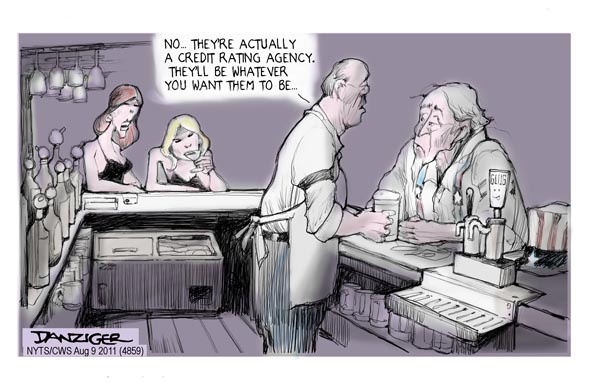
Credit Rating Agencies Explained - (www.danzigercartoons.com)

China threatens US with new debt downgrade - (www.guardian.co.uk)

Wall Street vs. Warren - (www.baselinescenario.com)

Beijing house prices lower by 5.1% as policy tightening takes hold - (www.xinhuanet.com)

You don't need a buyer's agent. Use seller's agent! - (www.housing-kaboom.blogspot.com)

Foreclosures jump 7% in October from September - (www.marketwatch.com)

Pot growers see opportunity in empty Las Vegas homes - (www.latimes.com)

Equalizing Payments for Identical Medical Treatments - (www.nytimes.com)